For homeowners and businesses in Redland Bay, investing in a new bitumen driveway is a significant decision that promises enhanced curb appeal, durability, and functionality. Whether you're planning an elegant asphalt driveway installation for your residential property, a robust acreage driveway, or a high-traffic asphalt carpark construction, the longevity and performance of https://jsbin.com/wekuxokece your finished surface hinge almost entirely on one critical factor: the quality of its base preparation. In 2026, with advanced materials and techniques available, neglecting this foundational stage is simply not an option.
A properly prepared base acts as the backbone of your asphalt driveway, distributing the weight of vehicles evenly, preventing movement, and ensuring excellent drainage. Without it, even the highest quality bitumen will fail prematurely, leading to unsightly cracks, potholes, and costly repairs within just a few years. For Redland Bay's unique climate and soil conditions, understanding and executing superior base preparation is paramount.
The Unseen Foundation: Why Base Preparation is Non-Negotiable
Think of your driveway as a building; its foundation is hidden, but absolutely essential. The same principle applies to your bitumen driveway. The base layers beneath the asphalt are responsible for:
- Structural Integrity: Supporting the weight of vehicles, from family cars to heavy service trucks, without deforming. Drainage: Preventing water from pooling under the surface, which can lead to subgrade softening and eventual pavement failure. This is particularly crucial in Redland Bay, which experiences significant rainfall. Stability: Minimizing movement caused by soil expansion and contraction, preventing cracks and uneven surfaces. Longevity: A well-prepared base can extend the life of your asphalt driveway by decades, offering a superior return on your investment.
In 2026, with increasing demands on infrastructure and a focus on sustainable, long-lasting solutions, the industry standard for base preparation has never been higher. Cutting corners here will inevitably lead to frustration and additional expenses down the line.
Key Stages of Superior Base Preparation for Bitumen Driveways in 2026
The process of preparing a robust base for your bitumen driveway involves several meticulously executed steps. Each stage is vital and contributes to the overall strength and resilience of the final surface.
1. Comprehensive Site Assessment and Planning
Before any earth is moved, a thorough understanding of the site is essential. For Redland Bay properties, this includes:
Soil Analysis: The type of soil beneath your proposed driveway significantly impacts preparation. Redland Bay, like much of South East Queensland, can feature reactive clay soils that expand and contract with moisture changes. Identifying these early allows for appropriate stabilization or deeper excavation. Geotechnical surveys are becoming more common for larger projects like asphalt carpark construction to ensure optimal design.
Drainage Considerations: Water is the enemy of any pavement. Proper planning involves assessing natural water flow, identifying potential pooling areas, and designing an effective drainage system. This might include ensuring adequate fall for surface runoff, installing subsurface agricultural drains (ag-pipes), or constructing spoon drains along the edges. Given Redland Bay's sub-tropical climate, effective drainage is not just a recommendation, it's a necessity.
Gradient and Slope: Establishing the correct slope ensures water sheds efficiently from the driveway surface. This requires precise measurements and planning to achieve the desired aesthetic and functional outcome, especially for longer acreage driveways.
Utility Checks: Locating existing underground services (water, power, gas, communications) is critical to prevent damage during excavation. Dial Before You Dig is a mandatory step in 2026 for any significant ground disturbance.
Permit Requirements: Depending on the scale and location of your project, especially for commercial asphalt carpark construction or significant residential works, local Redland Bay council approvals may be required. Always verify these before commencing work.
2. Excavation and Subgrade Preparation
This stage involves preparing the natural ground upon which your new driveway will rest.
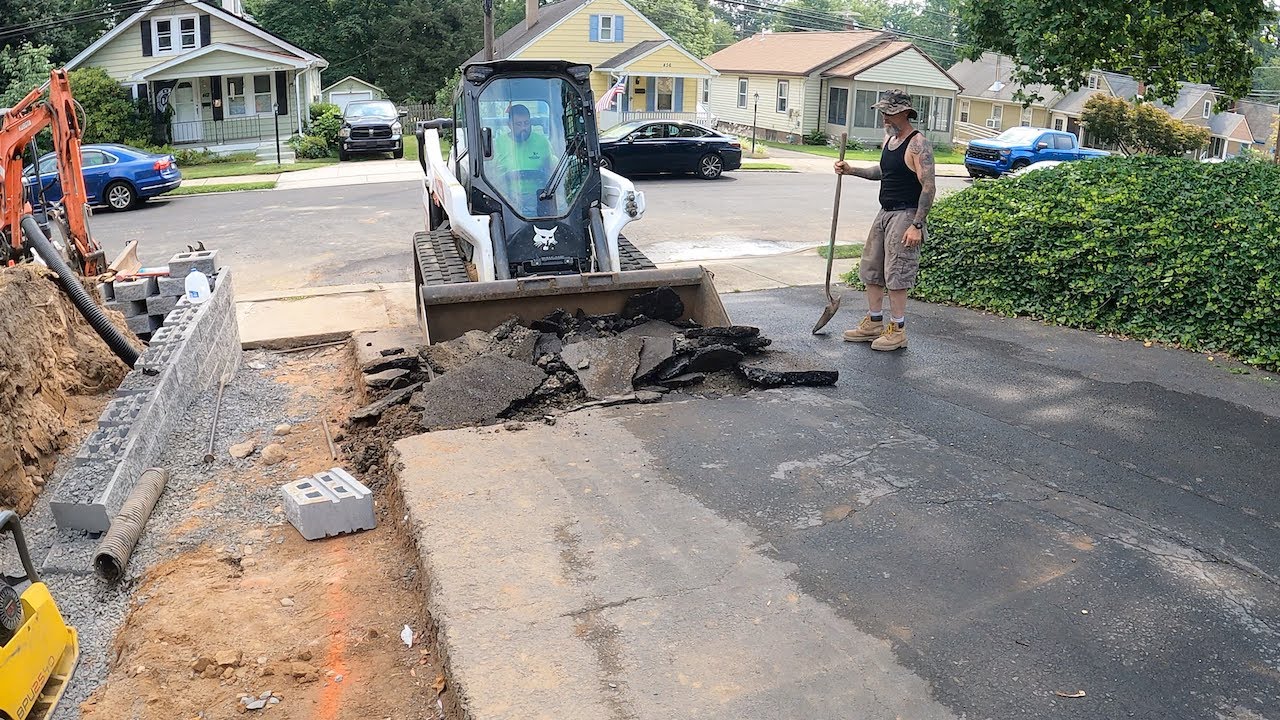
Clearing and Stripping: All vegetation, topsoil, organic matter, and debris must be completely removed. Topsoil, being rich in organic material, is unstable and unsuitable as a base for pavement. Achieving Correct Depth: Excavation is carried out to the specified depth, which accounts for the various base layers and the final asphalt thickness. For a standard residential asphalt driveway, this might be 200-300mm, while an acreage driveway or asphalt carpark construction might require significantly more. Subgrade Compaction: Once excavated, the exposed subgrade (the natural soil beneath) must be thoroughly compacted. This increases its density and load-bearing capacity, preventing future settlement. Specialized compaction equipment, such as vibratory rollers, is used to achieve the required compaction levels, often measured by a penetrometer or density tests. Addressing Problem Soils: If reactive clays or other unstable soils are present, further measures might be necessary. This could involve over-excavation and backfilling with stable material, or soil stabilization techniques using lime or cement, a common practice in challenging Redland Bay soil conditions.3. Implementing Effective Drainage Systems
As mentioned, drainage is paramount. Beyond surface grading, subsurface drainage is often required. Agricultural pipes (ag-pipes) wrapped in geotextile fabric are commonly installed in trenches filled with drainage aggregate to collect and divert groundwater away from the driveway structure. These systems are strategically placed to manage water runoff from the surrounding landscape and prevent it from saturating the subgrade. For acreage driveways, larger culverts might be needed to manage natural watercourses.
4. Laying the Geotextile Fabric (Separation Layer)
A modern best practice in 2026, particularly for challenging soil conditions, is the installation of a geotextile fabric. This durable, permeable material is laid directly on the compacted subgrade before the road base. Its primary functions are:
- Separation: Preventing the road base aggregate from mixing with and sinking into the softer subgrade soil, which would compromise the base's integrity. Filtration: Allowing water to pass through while retaining soil particles, preventing clogging of drainage systems. Reinforcement: Providing an additional layer of stability and load distribution.
While an optional step, it significantly enhances the long-term performance of any asphalt driveway installation, especially for heavy-duty applications like asphalt carpark construction.

5. Constructing the Base Course Layer (Road Base)
This is the primary structural layer of your driveway's foundation.
Material Selection: The base course typically consists of a high-quality crushed rock or gravel, often referred to as 'road base.' In Australia, common specifications include DGB20 (Dense Graded Base, 20mm maximum aggregate size) or DGS40 (Dense Graded Sub-base, 40mm maximum aggregate size). These materials are specifically engineered for pavement foundations, offering excellent interlocking properties and strength when compacted.
Layer Thickness: The thickness of the base course depends on the anticipated traffic load. A standard residential bitumen driveway might use 150-200mm of compacted road base, while a heavy-duty acreage driveway or an asphalt carpark construction could require 300mm or more, often laid in multiple lifts (layers).
Spreading and Grading: The road base is spread evenly using graders or specialized machinery to achieve the precise levels and cross-falls determined during the planning stage.
Compaction: This is perhaps the most critical step. The road base must be compacted to maximum density using heavy vibratory rollers. Compaction is often done in layers (lifts) if the total thickness is significant. Correct moisture content in the road base material is crucial during compaction; if it's too dry, it won't compact properly; if too wet, it can become unstable. Achieving optimal compaction ensures the base is stable, strong, and resistant to settlement.
6. Applying a Primer Seal (Binding Layer)
Before the final asphalt layer is applied, a primer seal is often sprayed onto the compacted road base. This is a thin coat of bituminous material that penetrates the surface of the road base, binding the fine particles together. Its functions include:
- Dust Suppression: Preventing dust from rising and interfering with the adhesion of the asphalt. Binding: Creating a strong bond between the road base and the overlying asphalt layer. Moisture Barrier: Providing a temporary seal to protect the base from moisture before the asphalt is laid.
This step ensures optimal adhesion for the final asphalt driveway surface, enhancing its overall durability and performance.
Common Challenges for Redland Bay Driveways and How to Address Them
Redland Bay's environment presents specific considerations for base preparation:
Reactive Clay Soils: Many areas have reactive clays that swell when wet and shrink when dry. Proper subgrade compaction, potentially with soil stabilizers or geotextile fabrics, and superior drainage are essential to mitigate movement.
Heavy Rainfall: The region experiences significant downpours. This reinforces the need for robust drainage systems, both surface and subsurface, to prevent water ingress into the base layers.
Acreage Driveways: Longer driveways on larger properties often traverse varied terrain and soil types, requiring more complex planning for grading, drainage, and material selection.
Coastal Proximity: While not directly impacting base preparation materials, the humid, salty air can influence the long-term performance of the asphalt itself, making a perfect foundation even more crucial for overall longevity.
Choosing the Right Contractor for Your Asphalt Driveway Installation in Redland Bay
Given the complexity and importance of proper base preparation, selecting an experienced and reputable contractor is paramount. When considering an asphalt driveway installation or asphalt carpark construction in Redland Bay:
- Look for Local Expertise: Choose a contractor with specific experience working with Redland Bay's soil types and climate. They will understand the unique challenges and solutions required. Verify Licensing and Insurance: Ensure they are fully licensed and insured for your protection. Request Detailed Quotes: A comprehensive quote should clearly outline all stages of base preparation, materials used (e.g., DGB20), thicknesses, and drainage provisions. Beware of quotes that seem unusually low, as they often skimp on base preparation. Check References: Ask for examples of previous work in the Redland Bay area and speak to past clients.
Future Trends in Base Preparation: 2027 and Beyond
The construction industry is continually evolving. Looking towards 2027 and beyond, we anticipate further advancements in base preparation:
- Enhanced Geotextiles and Geogrids: Development of stronger, more durable, and multi-functional geosynthetics for improved soil stabilization and reinforcement. Sustainable Materials: Increased use of recycled materials, such as crushed concrete or reclaimed asphalt pavement (RAP), in road base layers, contributing to a circular economy. Smart Drainage Solutions: Integration of sensor technology to monitor subgrade moisture levels and optimize drainage system performance. Advanced Soil Stabilizers: New chemical and biological soil stabilization agents that offer more effective and environmentally friendly alternatives for challenging soil conditions.
These innovations will further enhance the durability and sustainability of bitumen driveways and asphalt carpark construction projects.
Your Investment Deserves a Solid Foundation
Ultimately, the quality of your bitumen driveway in Redland Bay is a direct reflection of the effort and expertise invested in its base preparation. While it's the unseen part of the project, it's the most critical. Skimping on this stage will inevitably lead to premature failure and costly repairs, negating any initial savings. By understanding the intricate steps involved and insisting on professional, high-quality execution, you ensure your asphalt driveway will provide decades of reliable service, enhancing your property's value and functionality. For durable, long-lasting asphalt driveway installation or robust acreage driveway solutions in Redland Bay, always prioritise the foundation.
Redland Bay Asphalt Driveways
5/50 Jardine Dr, Redland Bay QLD 4165, Australia
ph. (07) 3132 1203